
Justice and Utopia
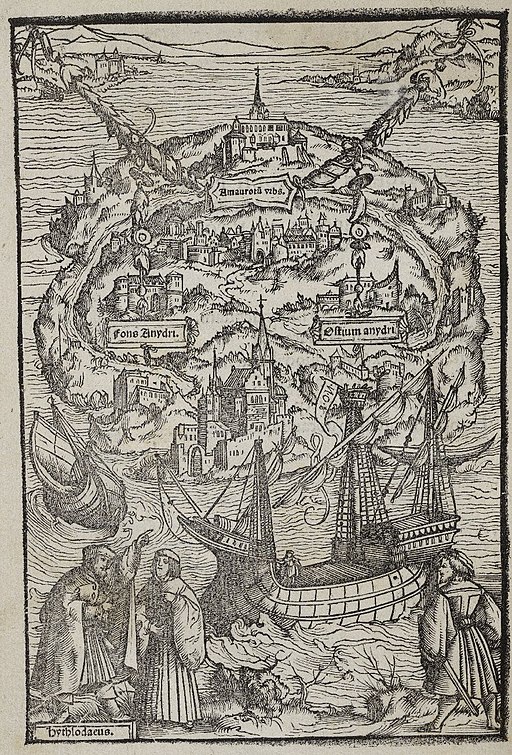
Students engage with the ‘Ring of Gyges’ story from Plato’s Republic and John Rawls’ concept of the ‘veil of ignorance’ to examine how a just society might be organized.
Students engage with the ‘Ring of Gyges’ story from Plato’s Republic and John Rawls’ concept of the ‘veil of ignorance’ to examine how a just society might be organized.

Materials needed: John Locke’s Second Treatise on Government, chapters two and eight. An alternative is James Rachels’ The Elements of Moral Philosophy, chapter eleven, “The Idea of a Social Contract” (see full citations and links in the ‘Resources’ section) A questionnaire (see below) Poster board for displaying the finished constitution Optional: online discussion forum; wig … Social Contract Theory: Creating a Cooperative Learning Environment
Materials needed Index cards Whiteboard and several different colored dry erase markers Description Pass out one index card to each student. Instruct the students to draw, without using representations of people (including stick figures, faces, and the like), a creative representation of a good friendship. Have the students then discuss their drawings in small … On Friendship
Materials needed Plenty of paper Several sets of 5 different colored pencils or markers Timer Warm-Up Activity: Ask your students to think about how they define a stereotype. Work in small groups to come up with a basic definition. Have your students write this definition down. After small group discussion, write each group’s definition on … Stereotyping
Materials needed List of roles and responsibilities (see below) A bag of candy Description Begin the exercise by holding up the bag of candy (make sure you have enough for at least one piece for every student) and ask, “What’s the fair way to distribute the candy in this bag? Who all should get … Fair or Equal?
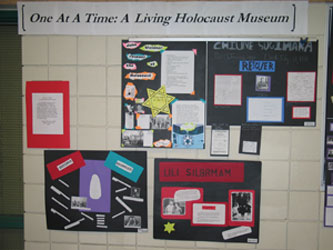
Talking About Moral Philosophy and Genocide with Middle School Students Middle school students often face difficult moral choices. We can help students approach these choices thoughtfully by introducing them to philosophical inquiry, and inviting them to consider such moral issues as the consequences of inaction and silence, the difference between inaction and indifference, and whether … Moral Philosophy and Genocide
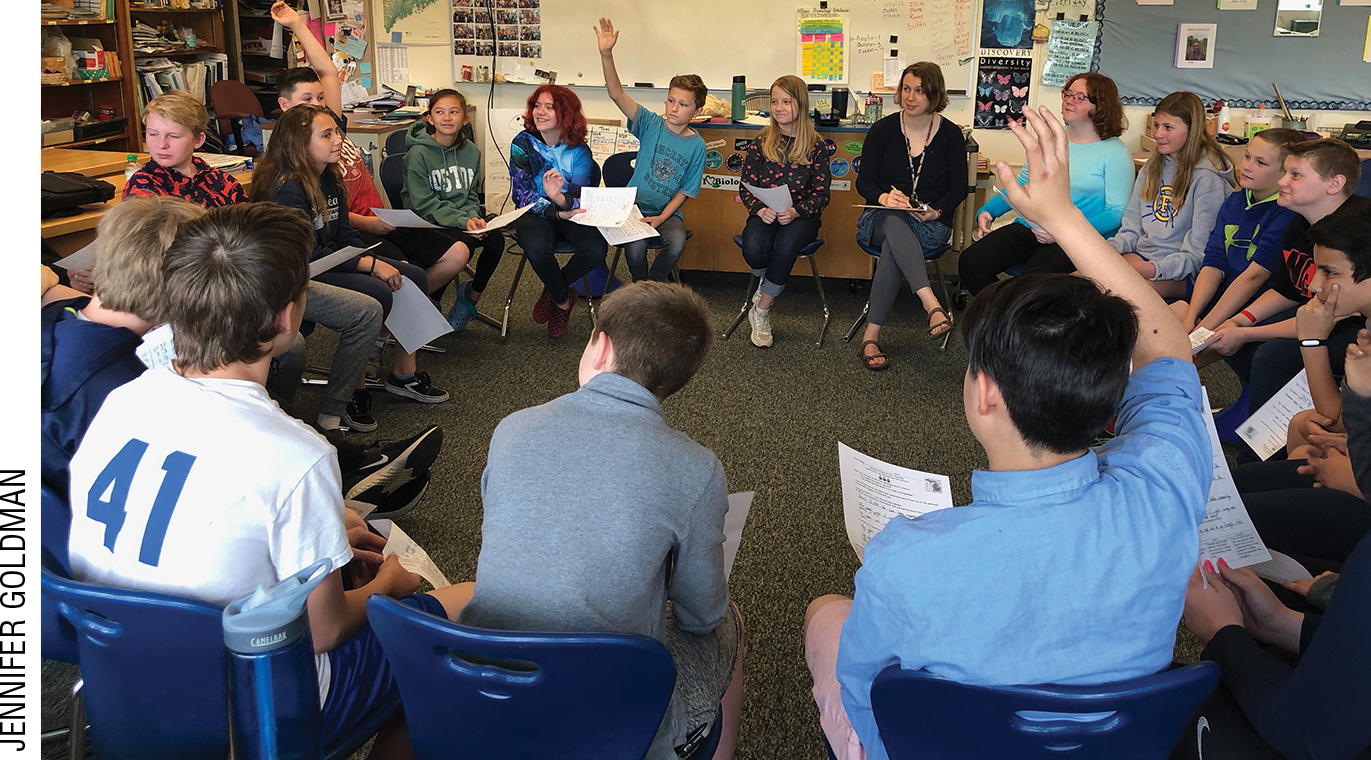
This exercise attempts to give students the opportunity to formulate rules that they themselves would choose to be governed by. It explores the rules that they, as a community, would agree upon. And it tries to implement these rules in the classroom setting so as to test their viability in the crucible of real-world experience. … One Rule Game
The Moral Spectrum Exercise In this exercise, students are introduced to “the moral spectrum”—seven different perspectives on the right thing to do, seven different questions to ask themselves to determine whether a particular course of action is right or wrong. These questions are drawn from the dominant moral theories in Western philosophy over the past … Moral Spectrum Exploration Exercise
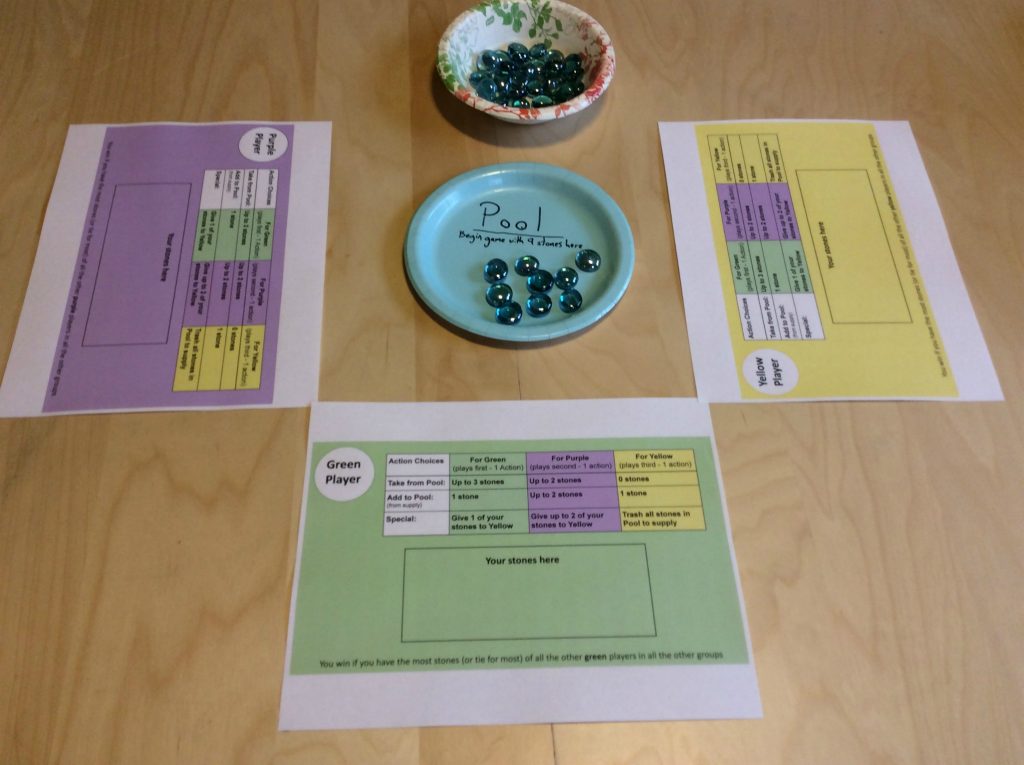
What is Difference? Difference is an easy-to-learn, fast-to-play, negotiation game that is designed to promote philosophical discussion about inequity both inside and outside of the game. Set-up Divide the class into groups of exactly 3 students each. Each group consists of a green, purple, and yellow player. Each group is given player cards at random … Difference: A Philosophy Game

Four Ethical Dilemmas Lying: A girl is taken to a carnival by her dad. It is her tenth birthday and he’s promised her that she can choose any 5 rides. But as they approach the gate, he discovers that he’s forgotten his wallet. This is the last day of the carnival and it’s too far … Ethical Dilemmas

PLATO is part of a global UNESCO network that encourages children to participate in philosophical inquiry. As a partner in the UNESCO Chair on the Practice of Philosophy with Children, based at the Université de Nantes in France, PLATO is connected to other educational leaders around the world.
Connect With Us!