Area: Other Areas

God: All-Good or All-Evil…is there any Difference?

A Topic Concerning the Question of Evil A long-simmering debate in theology involves the status of the classical definition of God.  Traditionally, one area of agreement between Theists and Atheists has been in the definition of God; without this agreement, they wouldn’t really be able to debate.  The mainstream among Abrahamic monotheists tends of center around God: All-Good or All-Evil…is there any Difference?

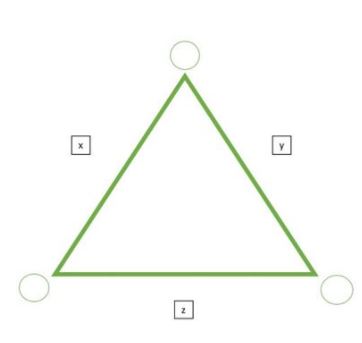
Choose Two

Triangle with x, y, z tabled on sides

Instructions: Facilitator performs the below: Draw/Project this diagram into a shared visible space. Prompt students to write down: 3 qualities that make a good ________.(e.g. friend) Randomly solicit students to contribute 3 different qualities. Write these where x, y, and z are shown. (Make sure they are conceptually different). Field clarifying questions about x, y, Choose Two

The Problem of Evil

Cat walking on park bench.

In the Judeo-Christian-Islamic traditions, one of the major problems for theists [those who believe that there is a God] is the “Problem of Evil.”  It runs like this: If God is all-good, all-knowing, and all-powerful, how can there be evil in the world?  Since we witness evil of various types, this presents a problem.  There The Problem of Evil

Can God be Happy or Sad?

Colorful painting of swirling galaxy.

One of the central questions in Theology involves the nature of God.  While religious studies employs different standards of proof that other disciplines in philosophy, one longstanding method has involved looking for logical consistency among different traits proposed.  In this lesson, the Polish philosopher Leszek Kołakowski calls for us to think about the question of God’s Can God be Happy or Sad?

Why Do We Love?

Romantic love – beautiful and intoxicating, heart-breaking and soul-crushing… often all at the same time! If romantic love has a purpose, neither science nor psychology has discovered it yet – but over the course of history, some of the most respected philosophers have put forward some intriguing theories. This video outlines five of these philosophical Why Do We Love?

Beliefs and Evidence

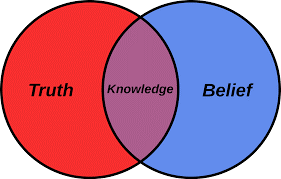
Materials needed: Paper and pen/pencil Description: Begin by having a loose discussion about the difference between “opinion” and “knowledge.” This should bring up claims about reasons, evidence, and proof. After a brief discussion about this difference, have the students write down three things they know. For each statement, have the students write down their best Beliefs and Evidence

What Do You Know?

Materials needed: Piece of paper and writing utensil Description: Note: this session operates as a good follow-up to a lesson plan on beliefs and evidence more generally. Ask the students for some things that they know. Put a few examples on the board. Tell the students the following story. It’s important that, for most of the What Do You Know?

The Ethics of Self-driving Cars

simple drawing of cars and trucks on windy road

Self-driving cars are already cruising the streets today. And while these cars will ultimately be safer and cleaner than their manual counterparts, they can’t completely avoid accidents altogether. How should the car be programmed if it encounters an unavoidable accident? Patrick Lin navigates the murky ethics of self-driving cars. Patrick Lin navigates the murky ethics The Ethics of Self-driving Cars

Implicit Bias

Background content: Ideally students would have read some background content on implicit bias coming in to the conversation. One possibility is Kelly and Roedder’s 2008 paper “Racial Cognition and the Ethics of Implicit Bias.” (Only provide the first half, as it gives some background on implicit bias and empirical evidence supporting its existence.) Another possibility is just to have Implicit Bias