Area: Language Arts and Literature

Moral Spectrum Exploration Exercise
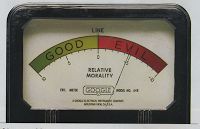
Photograph of a spectrum from good to evil to illustrate the idea of a "Moral Spectrum"

The Moral Spectrum Exercise In this exercise, students are introduced to “the moral spectrum”—seven different perspectives on the right thing to do, seven different questions to ask themselves to determine whether a particular course of action is right or wrong. These questions are drawn from the dominant moral theories in Western philosophy over the past Moral Spectrum Exploration Exercise
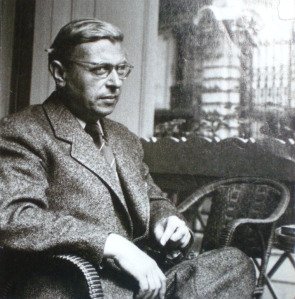
Can We be Authentic in Everyday Life?

“Republic of Silence,” by Jean-Paul Sartre Jean-Paul Sartre came to define post-war Existentialism.  In this prominent editorial published shortly after the occupation ended, Sartre articulates both the context to his views and the suggestion that everyday life may present even more challenges to real “Existential Choice.”  After watching this short video, read the essay and Can We be Authentic in Everyday Life?

What is a Human Being?

The first half of Brave New World  by Aldous Huxley depicts a socially programmed society in which advances in science and technology have created a world full of people who are biologically human but may not be fully human in other ways.  This lesson sequence can be done after a few days of initial work on What is a Human Being?

Escape from Spiderhead

Spider-webs in grass

Introduction: George Saunders’ “Escape from Spiderhead” is a dystopian short story that portrays a controlled pharmacological environment in which scientists experimentally manipulate the desires and emotions of human subjects. Students are confronted with the question of whether the chemical cocktails produced by our brains grant greater freedom than Spiderhead. Sanders’ riveting story is thought-provoking and Escape from Spiderhead